

Hard Shark Games 29 games Steam stunt actually happened: the publisher put 29 early access games live on Steam on September 15, 2026, and early Boxleiter estimates suggest the low-effort batch may already have covered more than half its listing costs in under a week.
The 29-Game Drop: What Happened on September 15
On a single Monday, Hard Shark Games flooded Steam with 29 new early access listings. The titles spanned familiar simulator and sports templates - Supermarket Life Simulator, Pool, F1 Simulator and two dozen more - all sharing near-identical store descriptions and AI-generated capsule art, according to PC Gamer's Steam Week in Review.
This wasn't a one-off experiment. Hard Shark Games already operates at extreme volume. The publisher has 217 total Steam listings - 121 full games and 96 demos - with a peak concurrent player record of just 13 across its entire catalog. The September 15 drop simply compressed that strategy into 24 hours.
For players browsing new releases, the effect is immediate clutter. Each game arrived as early access with minimal reviews, generic trailers, and store pages that read like copy-paste jobs. User reviews for Supermarket Life Simulator quickly flagged it as a straight asset flip, pointing to its resemblance to a cheap Unity store template rather than a built-from-scratch sim.
The Economics of Asset Flips on Steam
The math behind Hard Shark Games 29 games Steam release is brutally simple, and that's why it keeps happening. Steam Direct charges $100 per store page, recoupable after a game hits $1,000 in adjusted gross revenue. For 29 games, that's $2,900 upfront.
Development costs are kept near zero by building on store-bought templates. PC Gamer highlighted Supermarket Life Simulator as an example: it appears to use the $50 Checkout Frenzy Unity template, a ready-made supermarket sim kit. Swap the title, change a few colors, generate new capsule art, and you have a new listing for little more than the price of the asset plus the Steam fee.
That structure means profitability doesn't require hits. It requires a trickle. If a $50 template plus a $100 fee can generate even a few dozen sales at $5-$10 before Steam's 30% cut and refunds, the individual listing breaks even fast. Multiply that across 29 listings and the portfolio approach starts to make sense - even if most games sell almost nothing, a handful of modest sellers can carry the rest.
Boxleiter Estimates: Did Hard Shark Games Turn a Profit?
So did the September 15 batch make its money back? Early data says it's close. PC Gamer ran Boxleiter method estimates - the long-used Steam sales estimation formula that multiplies review count by a constant - for three of the 29 games just five days after launch.
For Supermarket Life Simulator, Pool, and F1 Simulator combined, the low-end Boxleiter estimate was $1,783 in revenue in five days. That's already over half of the $2,900 total listing fees for all 29 games, from just three titles. The high-end estimate would push that figure higher, though Boxleiter is inherently rough and doesn't account for discounts, refunds, or Steam's cut.
Context matters here. Boxleiter is not exact - it assumes a fixed ratio of buyers to reviewers, which varies by genre and price point - but it is useful for low-review games where every review represents a larger pool of silent buyers. Even if the true revenue is lower than the estimate, the signal is clear: Hard Shark doesn't need thousands of players. With a peak concurrent of 13 across its whole catalog, the publisher is clearly operating on tiny per-game sales that still add up when you ship at this volume.
If the other 26 games averaged even a fraction of those three, the full $2,900 would be recouped within the first week or two. After that, every additional sale - however small - is profit on top of the recouped fees, minus the negligible template costs.
The Bigger Picture: Steam's Discoverability Problem
The Hard Shark Games 29 games Steam drop is an extreme example of a chronic Steam issue: sheer volume. Steam now sees hundreds of new releases every week, and low-effort template games add noise that makes discovery harder for everyone else.
For genuine indie developers, that noise has a cost. New releases fight for the same limited slots on the New & Trending tab, the same algorithmic recommendation queues, and the same player attention. When 29 near-identical simulators land on the same day, they don't just compete with each other - they push other small games further down the list during the critical launch window when visibility matters most.
Valve has added filters, review thresholds, and algorithm tweaks over the years, but the $100 recoupable fee was designed to be low enough to not block legitimate solo devs. The side effect is that it also doesn't block high-volume asset-flip publishers. As long as the fee is recoupable and templates stay cheap, the economic incentive to flood the store remains.
What This Means for PC Gamers
If you're browsing Steam, the best defense is still the store page itself. Check for copy-paste descriptions across a publisher's catalog, look at the number of games they've released in a short window, and read the handful of user reviews - asset flips are usually called out within days, as Supermarket Life Simulator was. A $50 template game can still be fun for an hour, but it rarely gets updates, bug fixes, or meaningful early access development.
Reviews and SteamDB data help too. A game with a peak concurrent in the single digits a week after launch, dozens of sibling titles from the same publisher, and no dev responses is a strong signal to wait for a deeper sale or skip entirely. Wishlisting and following developers you trust also trains Steam's recommendation system to surface less of this filler.
Tired of digging through the noise?
Find the good stuff faster
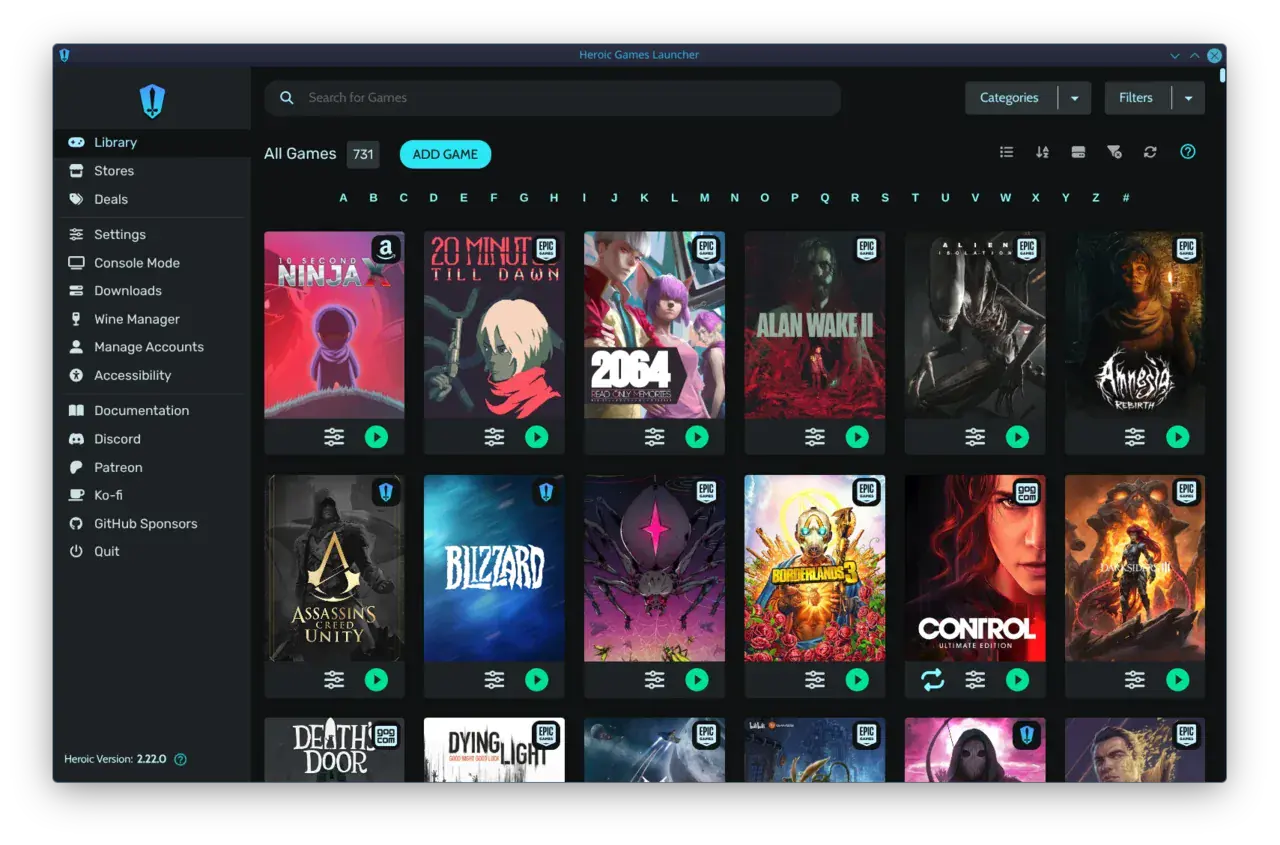
Steam's great for choice, less great for curation. warmUP pulls your library from Steam, Epic, GOG and more into one clean, controller-ready launcher so you spend less time hunting and more time playing.
Key Takeaways
- Hard Shark Games released 29 early access games on Steam on September 15, 2026, bringing its total catalog to 217 listings (121 games, 96 demos).
- Each Steam listing costs $100, recoupable after $1,000 in revenue - $2,900 total for the 29-game drop.
- Supermarket Life Simulator appears to reuse the $50 Checkout Frenzy Unity template, a common asset-flip tactic to keep dev costs near zero.
- Boxleiter estimates for just 3 of the 29 games totaled $1,783 in low-end revenue after 5 days, covering over half the total fees.
- The strategy shows asset flips can still turn a small profit at volume, even with a peak concurrent player count of just 13.
Written by
Devon Yates
Launcher & Platforms
Devon follows the platform wars: stores, subscriptions and the battle for your launch screen. He writes the weekly news roundup.
Comments(0)
No comments yet. Be the first to share your thoughts.