

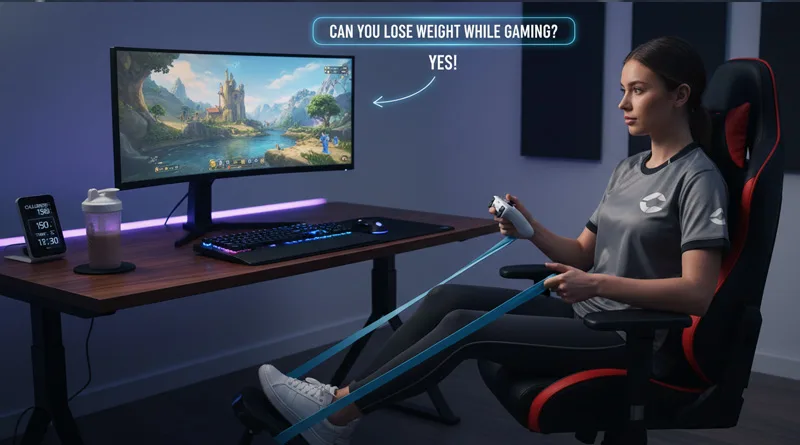
Introduction: Your Sedentary to Active Gamer Guide
Your neck is stiff, your lower back aches, and the post‑session grogginess feels heavier than that boss you just beat. This sedentary to active gamer guide is your roadmap out of that stiffness. If you’ve ever closed a game wondering how hours vanished while your body turned to stone, you’re not alone. The grind doesn’t have to be painful, and it’s never too late to rewrite the narrative—from sedentary to active, one small move at a time.
“Feeling stiff, groggy and guilty after a long gaming session? You’re not alone.”
— thepatient.pro
This guide is built for the gamer who hates the gym but loves chasing achievements. We’ll walk you through tiny, game‑friendly movement breaks, ergonomic tweaks, and science‑backed recovery routines that fit right into your play schedule. No overhaul, no equipment, no shame—just small steps that compound hard.
The Hidden Toll of Sedentary Gaming
A 2026 study in Nutrition found that high gaming hours among young adults are linked to increased risks of dietary issues, sleep deprivation, and weight gain. Hours of uninterrupted sitting don’t just drain energy—they shorten hip flexors, weaken glutes, and overload the spine. On top of that, console and PC gamers tend to flex their thumbs and fingers for hours without extension, setting the stage for strain and pain.
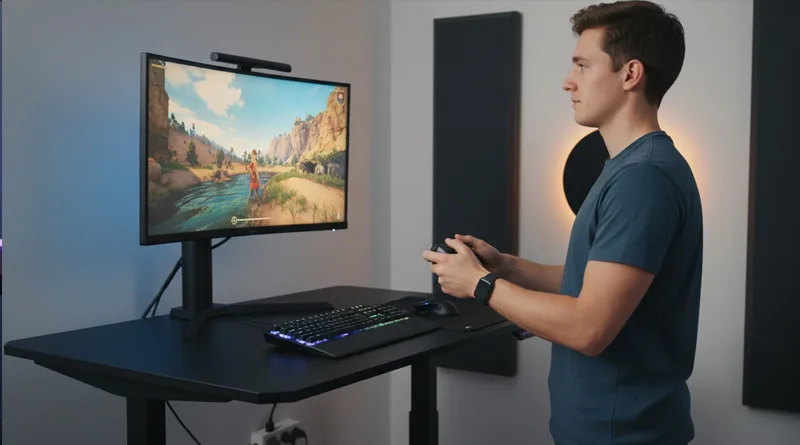
“The gaming grind should NOT be painful.”
— esportshealthcare.com
The encouraging news is that short, equipment‑free micro‑workouts done regularly can reverse many sedentary effects. Even 10‑15 minute movement sessions improve mood, enhance sleep, and support weight management. The trick is to weave them into your gaming flow, not fight it.
Step 0: Shift Your Mindset – Gamify Your Breaks
The biggest barrier isn’t muscle—it’s motivation. Traditional fitness feels boring and disconnected from gaming. That changes the moment you treat exercise like a side quest. Instead of dreading a workout, set up simple “rules” that turn downtime into XP for your body. Many esports teams already use a Pomodoro‑style approach: play for 45–60 minutes, then take a 10–15 minute active break.
Social accountability turns it into a party. Stream overlay reminders, chat bots, or guild challenges can nudge you to stand and move. Viewers often respond positively and may even join in. If you’re embarrassed on stream, frame movement as performance prep—the same way pros warm up before a match.
Step 1: Lock In Your Ergonomic Setup – The 90/90/90 Rule
Before you start any movement program, dial in your battlestation. The 90/90/90 rule is your baseline: adjust your chair height so your elbows rest at 90 degrees with forearms parallel to the floor, knees at 90 degrees, and feet flat on the ground. Your monitor should sit at eye level about an arm’s length away. This alone reduces neck, shoulder, and wrist strain dramatically.
Every 15–20 minutes, hit the Bruegger’s position: stand up, tuck your chin, turn your palms forward, and squeeze your shoulder blades together. Hold for 10 seconds. It resets your posture and fires up muscles that go dormant while you sit. Pair it with a quick focus shift—look at something 20 feet away for 20 seconds to ease eye fatigue.
Controllers deserve special care. Console gamers often keep their thumbs flexed on sticks without ever extending the fingers. Introduce a few hand yoga moves before you pick up the pad: finger abduction, wrist circles, and thumb-to-pinky stretches. Just 2–3 minutes of pre‑game mobility can slash injury risk.
Step 2: Pre‑Game Warm‑Up – Prime Your Body for Performance
Slamming into a ranked match with cold muscles hurts more than your K/D ratio. Static stretching before gaming actually decreases muscle activation and contractile velocity, so skip the old‑school hold‑and‑hope approach. Instead, do a dynamic gamer warm‑up: march in place for 30 seconds, circle your arms forward and backward, then hit 10 bodyweight squats. Add 10 finger abduction/extensions and 3 eye‑focus shifts (near‑far focusing) for 5 minutes total.
This wakes up blood flow, raises core temperature, and primes the neuromuscular pathways you’ll use for quick reactions. It also cuts the dreaded “first‑game slump” where your aim feels sluggish because your body is still asleep.
Step 3: Micro‑Workouts Between Matches – The Death & Loading Screen Rule
Every death, every loading screen, every queue tick is an invitation to move. The Death & Loading Screen Rule is beautifully simple: after each match, defeat, or loading transition, perform 10 squats, 10 push‑ups, or 30 seconds of jumping jacks. If you’re competitive, turn deaths into penalty reps—more deaths, more air squats. It attaches exercise to natural stopping points, so it never steals focus from the game.
For an even lighter touch, stand while you play. Standing burns 10–20% more calories per hour than sitting and keeps your core engaged. Pair it with a small foot‑rocking motion or simply shifting weight from leg to leg to avoid static lock‑out.
Step 4: The 15‑Minute Energy Reset Routine
When you’ve got a full queue break, a 15‑minute circuit returns more energy than a caffeine spike. The Energy Reset plan is designed to be done between ranked matches, with zero equipment:
2 minutes warm‑up (marching, arm circles, gentle torso twists). Then 10 minutes of circuit: 20 air squats, 10 push‑ups (on knees if needed), 20 high‑knee runs, 30‑second plank. Repeat the circuit twice. Finish with 3 minutes of breathing: inhale for 4, hold for 4, exhale for 4, hold for 4. This beats back post‑game brain fog and resets your focus for the next round.
Step 5: Cooldown & Sleep Prep – End Your Session Right
Late‑night gaming often bulldozes sleep quality. A 15‑minute Sleep‑Prep routine tells your nervous system the shift is over: start with gentle marching in place to bring your heart rate down, then move to slow hip hinges, glute bridges, and cat‑cow stretches. Finish with 3 minutes of box breathing (4‑4‑4‑4) and dim your lights. Avoid screens for at least 10 minutes afterward—yes, that means closing Discord—so melatonin can start its work.
If you can, replace sugary drinks with water or a zero‑calorie alternative during the night session. That single swap is the most effective dietary change for weight management among gamers, and it won’t crash your energy.
Tools to Stay Consistent in 2026
Modern wearables and AI coaching tools released in late 2025 and 2026 can nudge you toward movement automatically. They use heart‑rate variability, session timers, and recovery metrics to deliver personalized micro‑exercise prompts exactly when your body needs them. Even a simple phone timer that beeps every 20 minutes can work wonders.
Streaming overlays take this further: a chat command that displays your next exercise, or a bot that calls out “10 star jumps now” during intermission, builds accountability and fun. The community often jumps in, turning a solo habit into a shared ritual.
When You’re Ready to Jump Back In, Do It Faster
Back to the couch
Your games, zero‑setup, ready when you are.
warmUP unites your Steam, Epic, GOG and emulator libraries, so you spend less time fiddling with settings and more time grabbing that post‑match stretch. Boot from your couch with a controller—and start moving sooner.
Putting It All Together: A Weekly Starter Plan
A practical beginner week doesn’t require calendar acrobatics. Aim for 3 sessions of 20–30 minutes each, blending active gaming (think VR rhythm games or dance titles) with movement breaks during your traditional play. For example: Monday after work, 10‑min ergonomic check + pre‑game warm‑up, then 40 minutes of standard play broken by two 5‑minute Death & Loading Screen bursts. Wednesday, swap a match for a 15‑min Energy Reset circuit. Saturday, try a standing gaming session with a post‑game cooldown. Consistency over intensity.
The key is to start embarrassingly small—5 squats, 30 seconds of stretching—and let the habit snowball. Nobody hits a personal record on day one, but a month of showing up transforms what your body can handle.
Your Gamer’s Fitness Cheat Sheet
- Gamify breaks with the Death & Loading Screen Rule—10 squats per death or queue wait.
- Lock in ergonomics with the 90/90/90 rule and the Bruegger’s position reset.
- Warm up dynamically, not statically, with 5 minutes of general movement plus hand and eye exercises.
- Use the 15‑minute Energy Reset routine between matches to recharge focus.
- Finish every session with a Sleep‑Prep cooldown and a no‑screen wind‑down.
- Let tech work for you: timers, wearables, or stream bots to cue movement.
- Start small, stay consistent. Even 10 minutes a day rewires a sedentary routine.
Written by
Mika Lindqvist
Hardware & Performance
Mika benchmarks everything that runs a game — from handhelds to living-room rigs. If a frame drops, he wants to know why.
Comments(0)
No comments yet. Be the first to share your thoughts.