

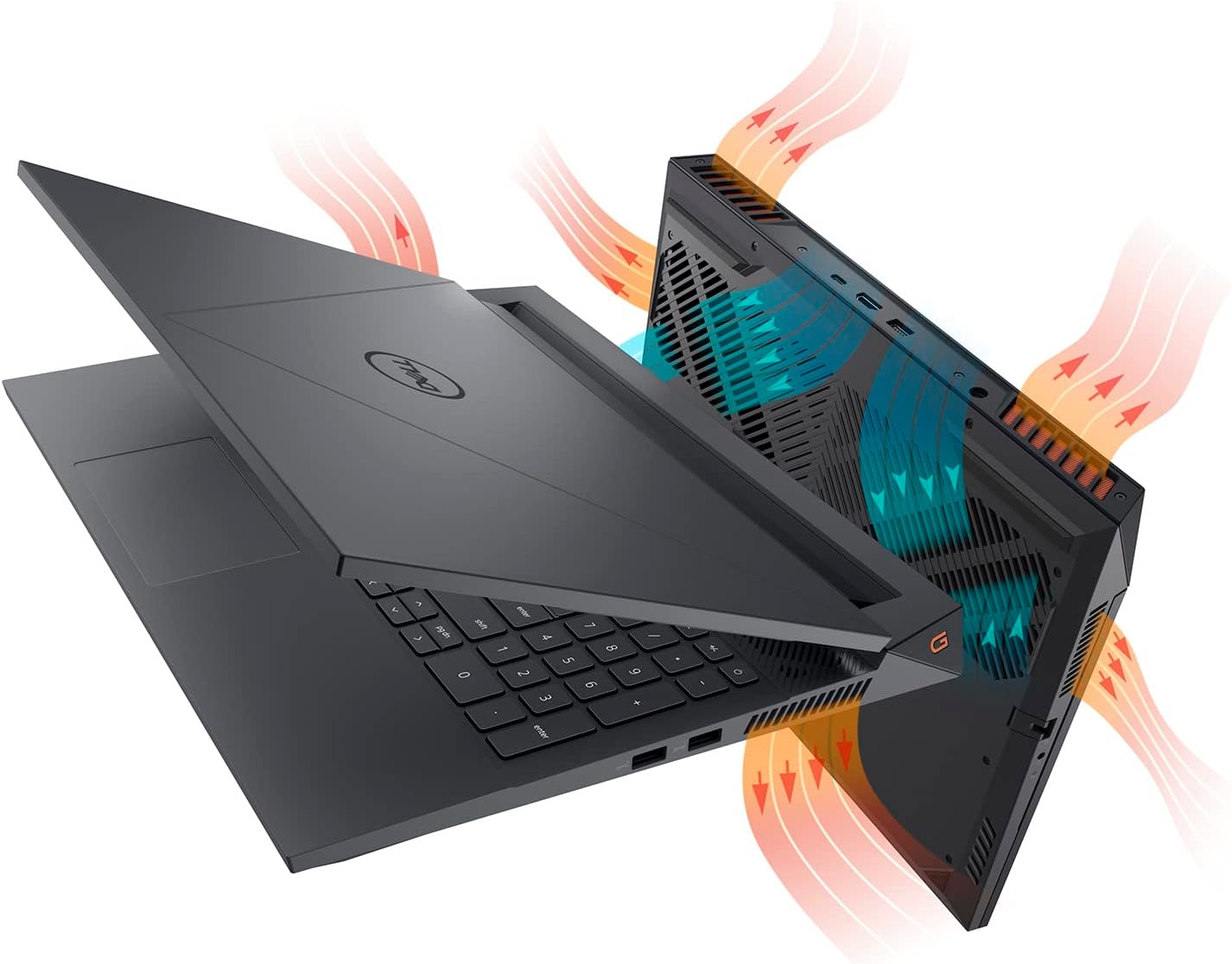
2026’s gaming laptop market is an odd beast. NVIDIA’s RTX 50‑series mobile GPUs have finally arrived, promising massive leaps in performance, but a brutal memory shortage has pushed prices 20–35% higher than last year’s equivalents. You can’t just grab the flashiest GPU name and call it a day. To find the best gaming laptops 2026 actually offers—the ones that nail gaming laptop price-to-performance 2026—you need to dig into the details that manufacturers love to hide: wattage, display panels, and real‑world street prices. We’ve done the digging for you. This RTX 50 laptop value guide cuts straight to the machines that deliver the most frames per dollar, whether you’re working with a tight $1,200 budget or ready to drop $4,000 on a no‑compromise 4K beast.
The TGP Trap: Why Wattage Matters More Than the GPU Name
The single most important number in a 2026 gaming laptop isn’t the GPU model — it’s the Total Graphics Power (TGP). Two laptops can both sport an “RTX 5070,” but if one is limited to a 100 W TGP and the other runs at the full 115 W (or higher with Dynamic Boost), the difference in real gameplay can be staggering. Our gaming laptop TGP comparison 2026 reveals that a high‑wattage RTX 4070 from last generation will often walk all over a power‑starved RTX 5070. In independent testing by Notebookcheck, a 140 W RTX 4070 in a Legion Pro 5 managed roughly 85 fps in Cyberpunk 2077 at 1440p High, while a 100 W RTX 5070 in a budget chassis struggled to hold 60 fps. The takeaway? Always verify the TGP in reviews before buying. A laptop that advertises the GPU but hides the wattage is a red flag.
“A 140W RTX 4070 significantly outperforms a 100W RTX 4070. … Always verify TGP in reviews before buying any gaming laptop.”
— Gadgets and Wheels
Best Budget Gaming Laptop 2026: Under $1,200 RTX 5070 Sweet Spot
RTX 5070 mobile GPUs deliver roughly 75–85% of the desktop RTX 5070’s performance, making them perfect for fluid 1440p gaming at high settings. At the sub‑$1,200 level, you’re typically looking at a 100–115 W TGP and a 1440p display — a combination that can push most AAA titles to 60–90 fps without breaking the bank. If you’re hunting for the best budget gaming laptop 2026, two standouts have emerged since Computex.
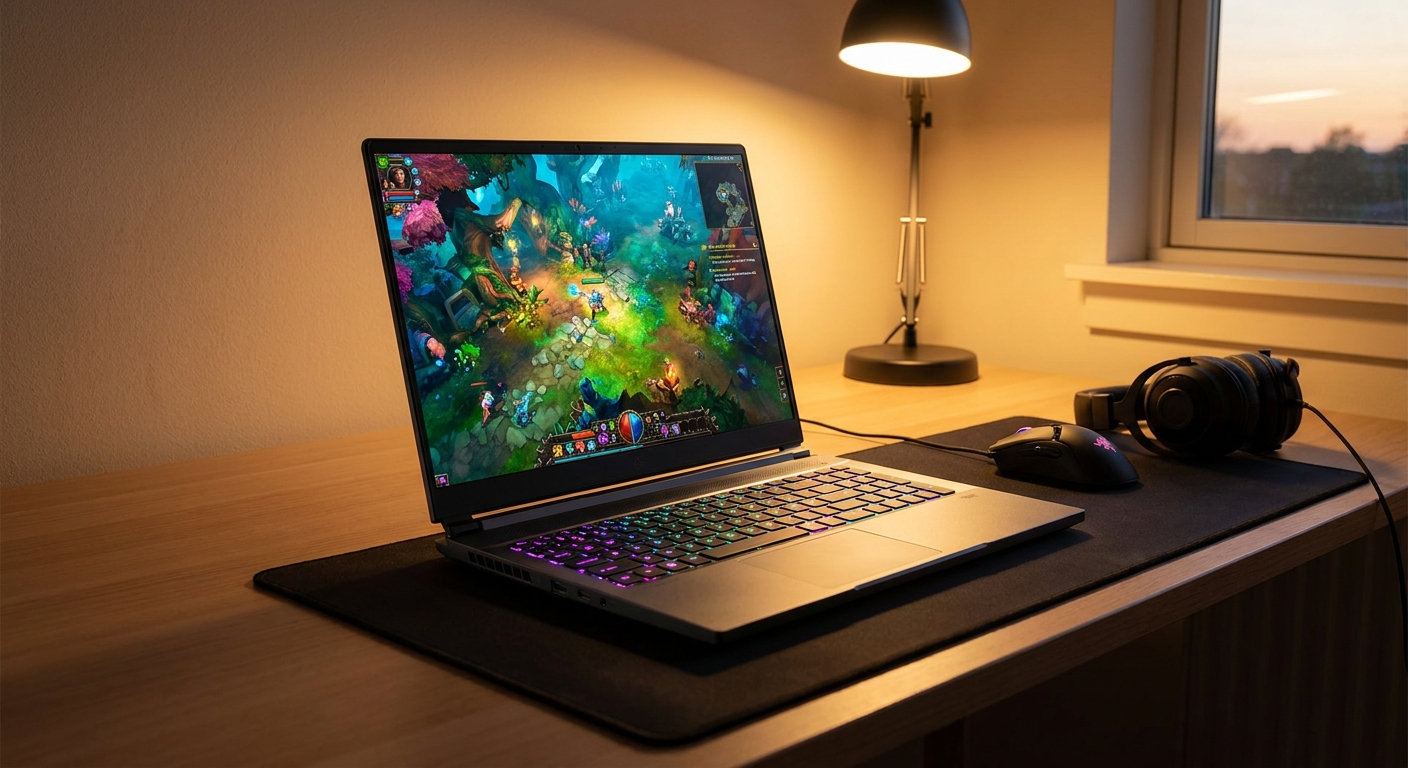
The MSI Katana 15HX (2026) pairs an RTX 5070 at 100 W with a 15.6‑inch 1440p 165 Hz IPS panel. Its MSRP hovers around $1,299, but Newegg and other retailers have already started offering it for as low as $1,049. At that price, it’s an absolute steal for a full RTX 50 laptop — just know that you’re leaving some GPU performance on the table compared to higher‑wattage variants.
For about $1,199, the Gigabyte Gaming A16 gives you the full 115 W RTX 5070 mobile, a 16‑inch 1200p 165 Hz display, and a generous 16 GB RAM / 1 TB SSD combo. The 1200p screen isn’t as sharp as a QHD panel, but it’s the better pick for competitive esports where frame rates matter above all else. Both laptops lack advanced MUX switches, so you’ll want to connect an external monitor over HDMI 2.1 to bypass the integrated graphics and squeeze out every last frame.
Best Gaming Laptops 2026 Mid-Range: $1,200–$1,500 Fight Club
When you step up to the $1,200–$1,500 tier, you unlock laptops with full‑fat GPU wattages, brighter QHD panels, and build quality that doesn’t scream “plastic fantastic.” This is where the price‑to‑performance ratio peaks in 2026, giving you the best gaming laptop price-to-performance 2026 has to offer.

The Lenovo Legion Pro 5/5i (Gen 9 and Gen 10) remains the crowd favourite. With the RTX 4070 running at the full 140 W TGP, a gorgeous QHD 240 Hz IPS screen, and a proper MUX switch, it’s been called “the champion of the sub‑$1,500 gaming laptop category” by Laptop Mag. Gen 9 models with 32 GB DDR5 regularly pop up on Amazon Warehouse for around $1,049–$1,299, while the newer Gen 10 with RTX 5070 configs lands closer to $1,499. The Legion’s slotted RAM also makes it a smart buy during the memory crunch — you can start with 16 GB and upgrade later when prices normalise. The MUX switch lets you route the dGPU directly to the display, so dropping the laptop onto a 4K TV via HDMI 2.1 gives you uncompromised frame rates without a reboot.
The ASUS ROG Strix G16 (2025/2026) is another heavy hitter. Configurable with an RTX 4070 at 140 W for roughly $1,199, or an RTX 5070 at $1,399, it boasts the stunning Nebula Display: QHD 240 Hz IPS with 100% DCI‑P3 coverage and wide viewing angles. Advanced Optimus lets you switch to dGPU-only output seamlessly, so docking to a big screen is plug‑and‑play. At over 400 nits peak brightness, the panel stays vibrant even in a sunlit room, and the HDMI 2.1 port cleanly outputs 4K 120 Hz with HDR. If you ever find yourself stretched out on the couch with a wireless controller, the Strix G16 becomes a flawless home console substitute.
Best Gaming Laptops 2026 High-End: 4K No-Compromises
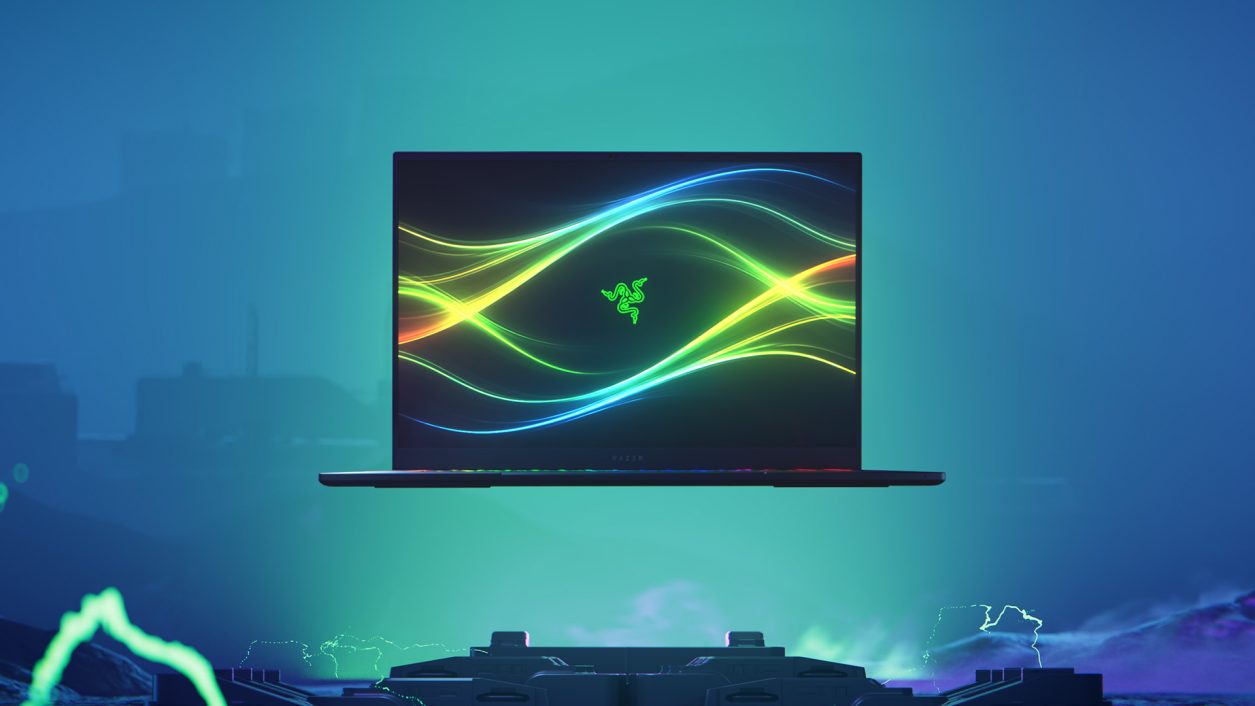
At the top of the food chain, two machines define the 2026 flagship experience: the ASUS ROG Strix SCAR 18 and the Razer Blade 16. The SCAR 18 runs the RTX 5090 mobile at a blistering 175 W TGP, mated to an 18‑inch 4K 240 Hz Nebula HDR display. It’s a desktop replacement in the truest sense, but its 4K native panel is wasted on a small screen unless you’re sitting inches away — the real magic happens when you hook it up to a 4K OLED TV via HDMI 2.1, turning your living room into a high‑fps theatre.
The Razer Blade 16 (2026) is the more refined sibling. It sustains up to 165 W on the RTX 5090, and its QHD+ 240 Hz OLED panel peaks at 1,100 nits — the brightest gaming laptop display we’ve ever seen. With DLSS 4 Multi Frame Generation, it pushes Cyberpunk 2077, Alan Wake 2, and Black Myth: Wukong past 100 fps at QHD+ max settings. The Blade’s HDMI 2.1 port cleanly outputs 4K at 120 Hz, so you get the best of both worlds: a sublime portable screen and uncompromised TV gaming.
2026 Memory Shortage: Why Prices Are High and When to Buy
One factor you can’t ignore this year is the global memory shortage. RAM and SSD prices have spiked over 400% compared to early 2025, directly inflating laptop MSRPs. An RTX 5070 config that should cost $1,099 can land at $1,399 at launch, and availability is patchy. The good news: industry analysts expect memory pricing to begin normalising by late July, and retailers are already discounting early stock to keep units moving. If you can wait a few weeks, you’ll likely save $100–$200 on many of the picks in this guide.

In the meantime, the smart play is to target laptops with user‑upgradeable RAM slots, like the Legion Pro 5, or to grab a previous‑generation RTX 4070 machine that’s still plenty powerful and deeply discounted. Those 4070 models are currently the true value champions while the memory shortage keeps 50‑series launch prices inflated.
User Pain Points (And How to Beat Them)
Buying a gaming laptop in 2026 comes with a few predictable headaches. Here’s how to side‑step them.
TGP Confusion. As we stressed earlier, the GPU name is meaningless without the wattage. Solution: Always check the laptop’s spec sheet or independent reviews for the exact sustained TGP. Prioritise brands like Lenovo and ASUS that openly advertise their full wattage ratings.
Awful Battery Life. None of these machines will survive a real gaming session unplugged. A 99 Wh battery at full GPU pull gives you 30–50 minutes, tops. Treat your gaming laptop as a portable desktop: plug it in when you game, and use the battery only for light productivity. If you need true cordless gaming, look at a Steam Deck or ROG Ally instead.
Sky‑High Launch Prices. The 2026 memory shortage has inflated RAM costs by over 400%, and laptop MSRPs reflect that pain. Solution: Be patient. Memory pricing is expected to stabilise by late July, and retailers are already discounting early. Alternatively, buy a laptop with easy‑access RAM slots (like the Legion Pro 5) and upgrade later, or snap up a previous‑gen model at a deep discount.
Taking Your Laptop to the Couch: TV Docking Setup
Every laptop in this guide — from the budget MSI Katana to the flagship Razer Blade — packs an HDMI 2.1 port that can drive 4K at 120 Hz on a modern TV. Paired with a wireless controller, a gaming laptop becomes a hybrid console that lives in your bag by day and powers your living room by night. But launching games from a keyboard and mouse on the sofa is a mess. That’s where a dedicated couch‑first launcher steps in.
Gaming on the big screen?
One Launcher. All Your Games. Couch-Ready.
Warmup turns your laptop into a console-like experience. It unifies your Steam, Epic, GOG, and emulator libraries, and lets you browse everything with a controller. Zero setup — just boot and play. Join the waitlist to be first in line.
The Bottom Line: Best Gaming Laptops 2026 Value Picks
- Budget champ: Gigabyte Gaming A16 ($1,199) for its full 115 W RTX 5070 and out‑of‑the‑box 16 GB/1 TB config.
- Best value overall: Lenovo Legion Pro 5/5i (Gen 9, ~$1,049–$1,299) with 140 W RTX 4070, QHD 240 Hz display, and a real MUX switch.
- Mid‑range king: ASUS ROG Strix G16 ($1,199–$1,399) for the Nebula Display’s colour accuracy and flawless HDMI 2.1 TV output.
- 4K dream: Razer Blade 16 (2026) if money is no object; its OLED panel and 165 W RTX 5090 deliver the ultimate portable and TV‑docked experience.
- Always check TGP before you buy — it makes a bigger difference than the GPU generation.
Written by
Mika Lindqvist
Hardware & Performance
Mika benchmarks everything that runs a game — from handhelds to living-room rigs. If a frame drops, he wants to know why.
Comments(0)
No comments yet. Be the first to share your thoughts.