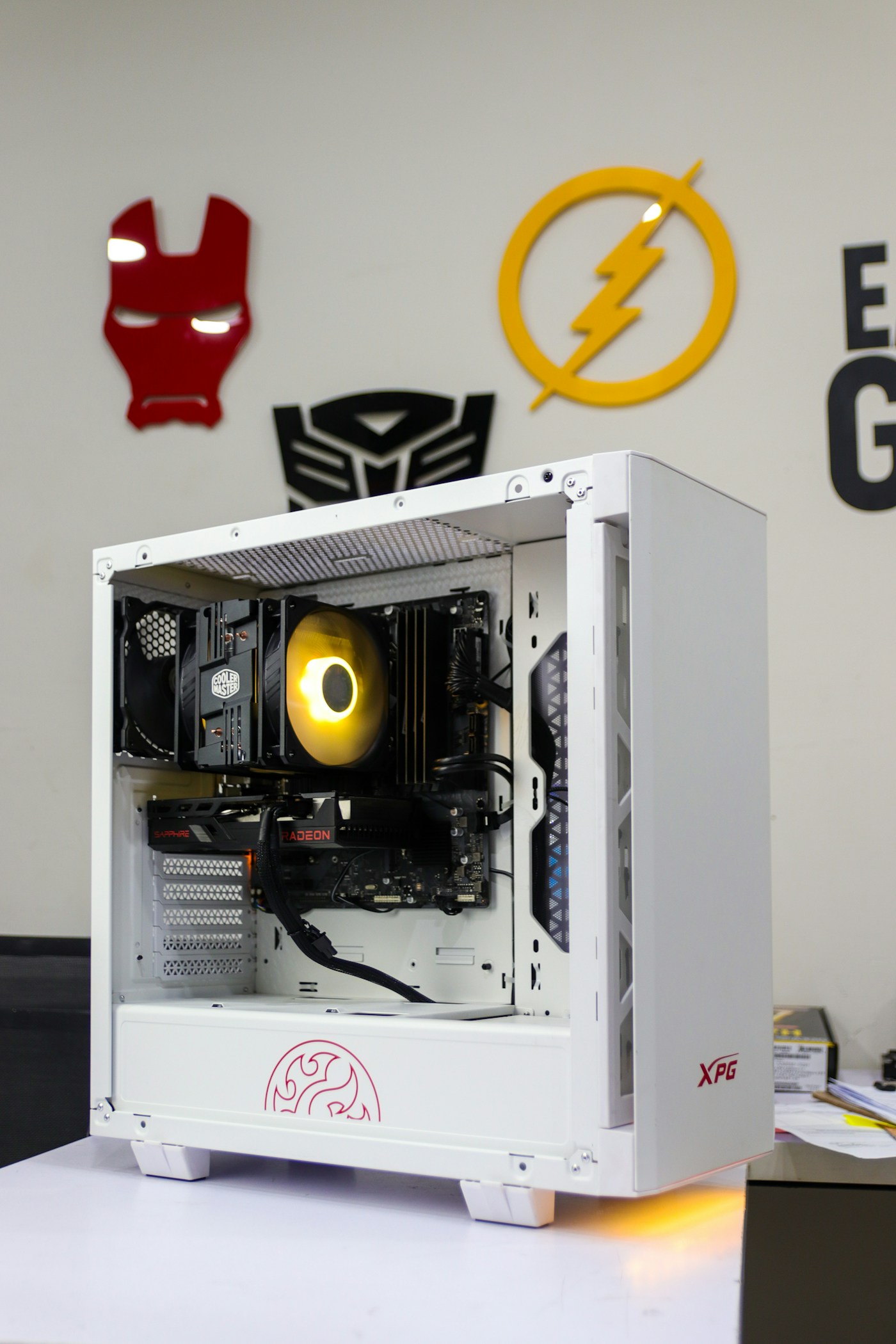
Wake Me Up sends a magic packet so the tower comes out of sleep. A Siri Shortcut SSHs in and runs SleepPC to put it back. BIOS and Windows have to allow both.
Wake-on-LAN is reliable on the PC’s Ethernet port, not Wi-Fi. Plug the tower into the router with a cable. In BIOS/UEFI, turn Wake-on-LAN on and ErP off. Motherboard menus use different labels: enable Wake on LAN, Resume by LAN, Power On By PCI-E, Resume by PCI-E Device, or PME Event Wake Up. Disable ErP Ready, EuP 2013, or Deep Sleep — those cut standby power to the network card, so the magic packet never arrives.
Tip. If you only change one BIOS line and WoL still fails, it is almost always ErP still enabled.
02
tune
Let Windows wake on a magic packet
In Device Manager, open the Ethernet adapter. Power Management: allow this device to wake the computer, and only allow a magic packet. Advanced: Wake on Magic Packet and Enable PME, if those rows exist. Then turn Fast Startup off, or Windows hybrid-shutdowns and the NIC never stays armed.
Control Panelchevron_rightPower Optionschevron_rightChoose what the power buttons dochevron_rightTurn on fast startup — off
Tip. Use the Ethernet MAC later, not the Wi-Fi MAC. They are different addresses.
03
fingerprint
Copy the MAC, IP, and subnet
On the PC, run ipconfig /all. Find the Ethernet adapter — not Wi-Fi. Physical Address is the MAC. IPv4 Address is the IP. Subnet Mask is usually 255.255.255.0. You will paste those three into the wake app in the next step.
ipconfig /all
04
add_circle
Add the PC in Wake Me Up
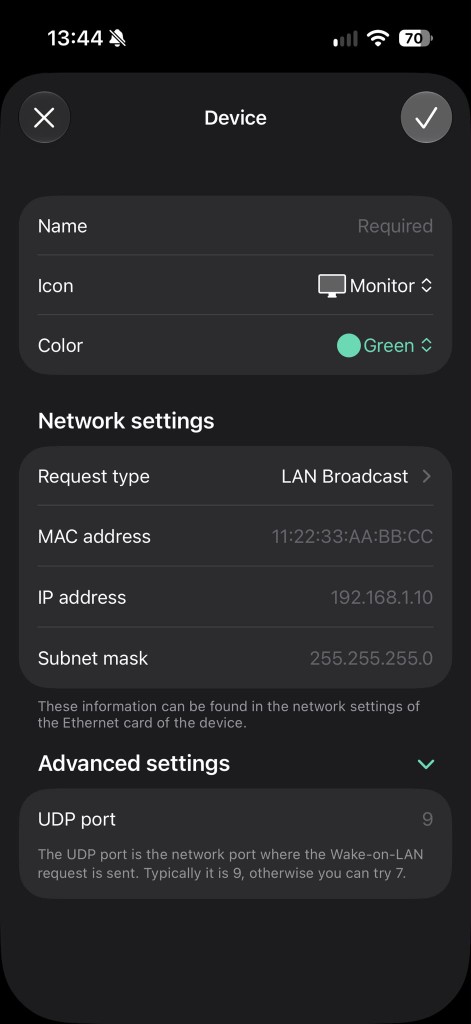
Open Wake Me Up — Wake-on-LAN, tap Plus, give it a name. Network settings: Request type LAN Broadcast, then paste the Ethernet MAC, the PC’s IP, and the subnet. Advanced settings: UDP port 9. If 9 does nothing, try 7. The iPhone has to be on the same Wi-Fi as that LAN. The screenshot uses placeholder numbers — yours must be the values from ipconfig.
Tip. LAN Broadcast is the right request type at home. Do not pick a WAN/remote mode for the living-room network.
05
waving_hand
Wake it
Put the PC to sleep, then tap the device in Wake Me Up. The app sends a magic packet to that MAC. The NIC hears it and the tower comes back. Wake Me Up can also expose the same wake to Siri and to a Home Screen widget once the device exists.
Tip. No blink, no boot: Ethernet cable, ErP off, Fast Startup off, and the Ethernet MAC — in that order.
06
bedtime
Make a SleepPC task on Windows
Wake-on-LAN only turns the PC on. Sleep is a separate door. In Task Scheduler, create a task named exactly SleepPC. Action: start a program. Program rundll32.exe, arguments powrprof.dll,SetSuspendState 0,1,0. Allow the task to run whether you are logged on. If that hibernates instead of sleeps, turn hibernation off first with powercfg -h off, then try again.
rundll32.exe powrprof.dll,SetSuspendState 0,1,0
Tip. The Siri Shortcut in the next steps calls this task by name. If the name is not SleepPC, Siri will run nothing.
07
terminal
Turn on OpenSSH Server
The iPhone does not put Windows to sleep by itself. The Shortcut logs in over SSH and starts that task. In Windows, add the OpenSSH Server optional feature, set the OpenSSH SSH Server service to Automatic, and start it. Port 22. The username is your Windows account — the one you type on the login screen, not an email.
08
keyboard_voice
Build the Siri Shortcut that sleeps the PC
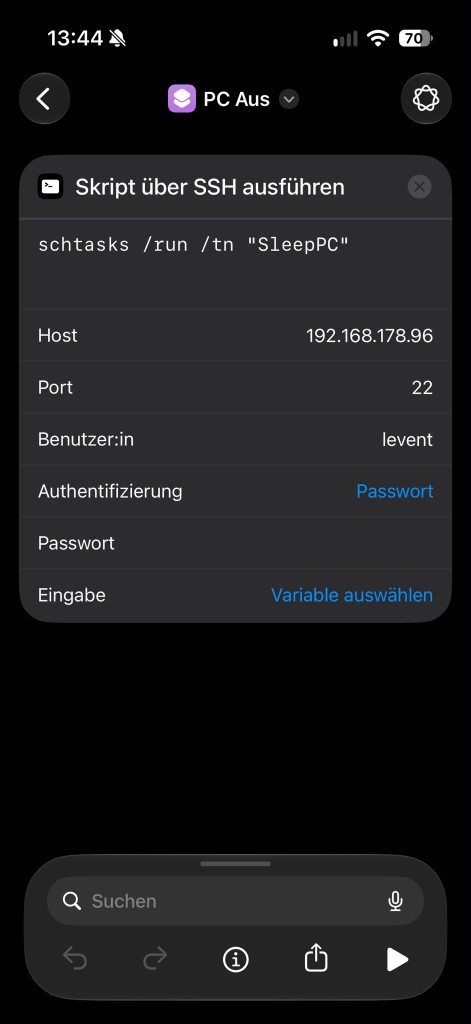
In Shortcuts, add Run Script over SSH. Script: schtasks /run /tn "SleepPC". Host is the PC’s IPv4 address, port 22, authentication Password, user your Windows account. Name the shortcut something you will actually say, like PC Aus. Then “Hey Siri, PC Aus” runs the task. Fill in your IP and username — the screenshot is one working example, not values to copy.
schtasks /run /tn "SleepPC"
Tip. Wake with Wake Me Up. Sleep with this Shortcut. Two apps, one couch.
Apps, cables, and other products in this guide are examples from personal experience — not ads. warmUP is not affiliated with, endorsed by, or paid by the makers of anything shown.